Administrator, Wage and Hour Division
Dr. David Weil
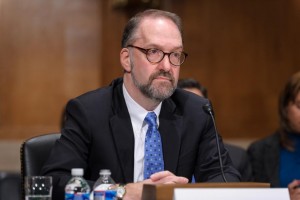 Prior to this appointment, Dr. Weil served as professor of economics and the Peter and Deborah Wexler Professor of Management at Boston University’s Questrom School of Business. He also served as co-director of the Transparency Policy Project at Harvard’s Kennedy School of Government. He has written five books, three regarding labor market policy including the recently published The Fissured Workplace. He has authored numerous articles and publications in a variety of economics, public policy, management, and industrial relations journals and books, as well as numerous publications in non-academic outlets.David Weil was sworn in as the Administrator of the Wage and Hour Division on May 5, 2014. Dr. Weil is an internationally recognized expert in public and labor market policy; regulatory performance; industrial and labor relations; transparency policy; and supply-chain restructuring and its effects.
“Working together, through a combination of education and enforcement, we can affect change to benefit everyone in this industry — from the workers in the fields to the growers and contractors who employ them.”
No stranger to the Department’s mission or its work, Dr. Weil has served as an adviser to the Wage and Hour Division, the Occupational Safety and Health Administration, and the Department of Labor, as well as to a number of other government agencies. He also has served as mediator and adviser in a range of labor union and labor/management settings across the globe. In addition to his work for the Department, his research has been supported by the National Science Foundation, the National Institutes of Health, the Russell Sage Foundation, the Alfred P. Sloan Foundation, and the National Institute of Occupational Safety and Health, among others.
Agricultural Outreach
In fiscal year 2014, the Wage and Hour Division investigations in the agriculture industry yielded violations 80 percent of the time and collected more than $4.5 million in back wages for workers. Enforcement alone, though, is not enough to improve labor law compliance and conditions for workers — direct outreach to industry employers is needed. Wage and Hour Division Administrator David Weil did just that when he met with the National Council of Agricultural Employers at its annual meeting in Washington, D.C., earlier this year. Weil told the gathering of growers, contractors, attorneys and others that, by collaborating to address common labor violations, a fair and level playing field is possible. “Working together, through a combination of education and enforcement, we can affect change to benefit everyone in this industry — from the workers in the fields to the growers and contractors who employ them,” he said.
Source: United States Department of Labor

Success Story: Nilsa Rodriguez
/in AFOP, Success Stories /by AFOP CommunicationsA former Proteus client, Nilsa Rodriguez, is having great success with her new business: “Fiesta Super Movil” or “Party on Wheels”. The event planning and recreation business started with the assistance of Proteus partner, the Nebraska Rural Enterprise Assistance Program (REAP) Program. Anna Santos, case manager in Columbus, Nebraska, tells this story:
Nilsa lives in Schuyler and spent many years working as a seasonal farmworker for Monsanto. She had dreams for herself that started with becoming a Proteus client. Nilsa began taking English as a second language (ESL) classes and was conversant enough to move onto the next step. She explored occupations and was thinking about becoming a certified nursing assistant (CNA), but eventually she realized that she was an entrepreneur at heart.
As her case manager, I helped Nilsa make the connection with the REAP Program. REAP provides the business education and financing needed by budding business people. It is a “mini-incubator of rural entrepreneurs.”
After completing her REAP classes, Nilsa was able to take her idea of becoming a party planner and turn it into a real business. Armed with a business plan, insurance knowledge, accounting and tax systems information, and a support system to be there for questions going forward, Nilsa was ready!
With a grant from REAP, Nilsa was able to purchase bouncy houses, tables and chairs. She was also able to put a building on her property to store supplies and decorations. She even purchased a trailer so that she could move her equipment from place to place. Currently “Fiesta Super Movil” – “Party on Wheels” is doing well enough that Nilsa can support her family, including a new baby born in 2015.
With the services provided by Proteus and REAP, Nilsa no longer has to spend her time laboring in the cornfields of Nebraska. She has the flexibility to be at home with her children while she operates a successful business in her community. And because of her determination to become bi-lingual with the help of Proteus and her ESL classes, Nilsa is not limited to doing business only with Spanish-speaking customers!
– See more at: https://www.proteusinc.net/2015/09/september-2015-newsletter/#party
Washington Update – September
/in AFOP /by AFOP CommunicationsWith summer ending and Congress back in session, lawmakers only have a handful of legislative days to avert a potential government shutdown. It’s unlikely that a shutdown will be allowed to happen, but it is possible. More likely, Congress and the president will agree on a series of short-term funding measures that maintain current spending levels and a continuing resolution (or “CR”) that could last through the end of President Obama‘s term in office. Republicans in Congress are divided, however, over how to defund Planned Parenthood after videos were made public apparently showing potentially criminal behavior. Some Republicans lawmakers want to force a showdown with the Democrats and the White House over this issue.
A grand budget compromise is highly unlikely, although pressure is mounting on all sides to break the Budget Control Act spending caps put in place a few years ago. According to Washington insiders, we can expect the status quo to prevail this year and next for the following four reasons:
Still we hope. As this is being written, Congress has just eight business days to get something done. And that does not take into account the day-long recess in observance of Yom Kippur. Unless congressional leaders move decisively and soon, we could be looking at a repeat of the October 2013 shutdown. Let’s hope not.
On a Related Note: A Glimpse under The Capitol Dome
On the topic of impending budget battle, the entire 46-person-strong Senate Democratic caucus sent a letter earlier this summer to the Republican leadership asking Senate Majority Leader Mitch McConnell (R- Kentucky) to schedule “immediate” budget negotiations “to avoid a manufactured crisis in the fall.” From the letter: “There are less than two months left in the fiscal year, and we are deeply concerned by the fact that negotiations to craft a bipartisan budget agreement have not yet begun. With the end of the fiscal year looming, we urge you to immediately schedule bipartisan budget negotiations so that we can work together over the coming weeks to avoid another manufactured crisis…. We are ready and willing to work with you to produce a fair and balanced Bipartisan Budget Act of 2015. Therefore, we respectfully request you schedule the first round of these important negotiations as soon as possible.”
In response, the majority leader’s spokesman blasted Democrats for holding spending bills up from floor consideration: “We wrote back to the staffers who sent the letter and got ‘out of office’ replies from both. But it’s important to note that Congress is already engaged in negotiations: Under new leadership, the Appropriations Committee for the first time in nine years passed all appropriations bills-most with Democrat support. But Democrats are refusing to allow a floor debate on the spending bills-going so far as to filibuster a pay raise for the troops.”
AFOP Wins OSHA Grant Renewal
/in Newsroom /by AFOP CommunicationsAFOP has won renewal of its Susan B. Harwood grant from the U.S. Department of Labor’s Occupational Safety and Health Administration (OSHA). AFOP’s grant is one of $10.5 million in one-year federal safety and health training grants OSHA has made to 80 nonprofit organizations across the nation for education and training programs to help high-risk workers and their employers recognize serious workplace hazards, implement injury prevention measures and understand their rights and responsibilities. View Full Press Release
The department’s Susan Harwood Training Grant Program funds grants to nonprofit organizations, including community/faith-based groups, employer associations, labor unions, joint labor/management associations, colleges and universities. Target trainees include small-business employers and underserved vulnerable workers in high-hazard industries. AFOP will use this $165,000 to provide agricultural safety training and 15-hour train-the-trainer training to peer trainers in the agricultural industry. Target audience includes low-literacy and non-English speaking seasonal and migrant farmworkers and their employers. Training topics will include the heat stress, pesticide safety, and tractor safety. AFOP also plans to use existing training materials on heat stress and pesticide safety, and develop new materials for tractor safety. Training will be offered in Spanish.
Children Essay & Art Contest Deadline Extended (8/21)
/in AFOP /by AFOP CommunicationsStudents ages 10-18, from farmworker families, are eligible to participate and can win cash awards and a trip to Las Vegas to show their work at the AFOP National Conference.
AFOP Member PathStone Wins DOL “Training to Work” Grant
/in Newsroom /by AFOP CommunicationsPathStone Wins DOL Grant to Improve Employment Opportunities for Formerly Incarcerated Adults and Youth
DOL announced June 25 that it has awarded AFOP member PathStone-Pennsylvania a $1.3 million grant through its “Training to Work” program which assists men and women enrolled in state or local work release programs in gaining the job skills necessary for in-demand occupations as they reintegrate back into society. Training to Work incorporates the comprehensive career pathways model that align education and training services to enable workers to attain industry-recognized credentials and find jobs.
According to DOL, with access to good jobs and stable employment, adults and youth involved in criminal justice system are less likely to become repeat offenders, which strengthens local economies and boosts public safety. However, rehabilitation becomes more difficult when a criminal record impedes the search for employment. To overcome this dilemma, DOL is awarding a total of $59 million to non-profit organizations to develop or expand programs to improve the employment opportunities for adults and youth involved in the criminal justice system. The funds will support programs that offer a range of services that include case management, mentoring, education and training that leads to industry-recognized credentials.
Meet the United States Department of Labor
/in AFOP, Newsroom /by AFOP CommunicationsAdministrator, Wage and Hour Division
Dr. David Weil
No stranger to the Department’s mission or its work, Dr. Weil has served as an adviser to the Wage and Hour Division, the Occupational Safety and Health Administration, and the Department of Labor, as well as to a number of other government agencies. He also has served as mediator and adviser in a range of labor union and labor/management settings across the globe. In addition to his work for the Department, his research has been supported by the National Science Foundation, the National Institutes of Health, the Russell Sage Foundation, the Alfred P. Sloan Foundation, and the National Institute of Occupational Safety and Health, among others.
Agricultural Outreach
In fiscal year 2014, the Wage and Hour Division investigations in the agriculture industry yielded violations 80 percent of the time and collected more than $4.5 million in back wages for workers. Enforcement alone, though, is not enough to improve labor law compliance and conditions for workers — direct outreach to industry employers is needed. Wage and Hour Division Administrator David Weil did just that when he met with the National Council of Agricultural Employers at its annual meeting in Washington, D.C., earlier this year. Weil told the gathering of growers, contractors, attorneys and others that, by collaborating to address common labor violations, a fair and level playing field is possible. “Working together, through a combination of education and enforcement, we can affect change to benefit everyone in this industry — from the workers in the fields to the growers and contractors who employ them,” he said.
Source: United States Department of Labor
For the First Time in Years, Congressional Committees Approve NFJP Funding Bill
/in AFOP /by AFOP CommunicationsThe House Appropriations Committee recently approved its version of the Fiscal Year 2016 Labor-Health and Human Services-Education Appropriations bill that includes level funding for the National Farmworker Jobs Program (NFJP) at $82 million. That is the same amount as in fiscal year 2015 and fiscal year 2014 before that. In these difficult budgetary times, AFOP is pleased we have been able to hold our own. We have been able to because we have worked hard to make certain that lawmakers understand clearly the great need for this life-changing program and the tremendous success our members have in providing its services. As Labor-HHS-Education Appropriations Subcommittee Chairman Tom Cole (R-Oklahoma) said during his panel’s consideration of the bill, “If you break even in this bill, you’re a winner.” Meanwhile, in the Senate, the committee-approved bill proposes an $8.9 million cut in the program, nearly an 11-percent reduction, about twice the amount cut by sequestration in fiscal year 2013.
In recent years, congressional appropriators have had trouble moving this measure through the regular legislative process because of controversial policy riders and disagreements over funding levels. Despite this year’s impressive progress, though, lawmakers once again face an uncertain future in advancing this measure, as well as the other yearly appropriations bills. The problem is the 2011 Budget Control Act, the law that brought spending caps and sequestration. In approving its budget plan this year, Congress held non-defense discretionary spending to the Act’s caps, but provided cap relief for defense funding. Congressional Democrats and the White House took exception to that, and Senate Democrats are now blocking consideration of the appropriations bills until their Republican colleagues agree to a budget compromise increasing funds for their discretionary priorities. Should the Democrats persist in their blocking effort, and should the Republicans refuse to negotiate a deal, the specter of a government shutdown this fall rises. While there appears little appetite for such a scenario, it is notable that both sides of the aisle have made comments recently seeking to assign the blame to the other party should a shutdown occur.
Obama Administration Announces Aid for Drought-Stricken West
/in Newsroom /by AFOP CommunicationsThe Administration announced June 12 new actions and investments of more than $110 million to support workers, farmers and rural communities suffering from drought and to combat wildfires. The new funding announced builds on the more than $190 million that agencies across the federal government have invested to support drought-stricken communities so far this year. View White House Fact Sheet
According to federal officials, 35 percent of the West is facing severe to exceptional drought. In California, the mountain snowpack that supplies most of the water during the summer months is only a trace above zero. All over the West, continued drought is leading to job losses, particularly in the agricultural sector. In California alone, a recent University of California Davis study estimates 18,000 lost jobs because of drought. Officials say that these losses leave working families struggling to make ends meet.
To help assist them in this time of need, DOL announced that it will award as much as $18 million to the State of California to provide jobs for workers dislocated by the drought. Starting in July, this National Dislocated Worker Grant will employ up to 1,000 workers for up to 6 months with public and nonprofit agencies working to build drought resilience, reduce wildfire risk, and improve water efficiency. The grant, made possible by the Workforce Innovation and Opportunity Act, will focus on the areas facing the most severe impacts in California. Other states that have received a drought emergency declaration and can document drought-impacted job losses will have the option to apply for similar Dislocated Worker Grants. The program in California will also support youth in drought-impacted households as well as the long-term unemployed.
Success Story: Caroline Garcia
/in Success Stories /by AFOP CommunicationsCarolina Garcia
Certified Nursing Assistant
Miami-Dade County Florida Farmworker Career Development Program (FCDP)
Carolina resides with her mother and sisters in order to save money. Her mother continues to work in agriculture and they financially struggle to make provisions for the entire family.
Carolina realized that in order for her to (1) provide for her children; (2) help with the household finances; and (3) continue her educational goals, she needed a different type of job. She decided to go to a local training center to obtain information. She received a flyer describing the Miami-Dade County Farmworker Career Development Program (FCDP). Carolina met with a Case Manager and enrolled in the program in August 2014. After a comprehensive assessment and the Case Manager’s professional assistance, she enrolled in the Certified Nursing Assistant program. By October 2014, Carolina completed the training, scheduled/passed the state examination, and received her CNA
In addition, Miami-Dade County’s FCDP provided Carolina with Employability Skills Training and job search assistance. In December 2014, Carolina secured employment as a Certified Nursing Assistant in a local nursing home. She was able to increase her monthly earnings by over $1500 and obtain health benefits. Her long-term goal is to obtain a Master’s Degree in Nursing and her short term goal is to enroll in either an RN or an LPN program.
“There are no excuses, I did it and I have 3 kids, so anyone can do it. I really appreciate all the great help I got from my Case Manager and the Farmworker Program because they helped me accomplish my goals. I wish the best for anyone else who gets the opportunity to further their education,” said Carolina.
The one thing that shouldn’t go missing in the story of food
/in AFOP, Health & Safety Programs, NFJP /by Kathleen NelsonThe one thing that shouldn’t go missing in the story of food
By: Kathleen Nelson, Director of Workforce Development
I’m currently blessed with a very inquisitive four-and-a-half-year-old spitfire full of questions about the world. This year in his preschool class, the children spent the autumn learning about food and nutrition. They learned about healthy eating, and what kinds of foods are ‘anytime foods’ like fruits and vegetables and what kinds of foods should be eaten ‘only once in a while’ like cookies and cakes. (That lesson may have only slightly taken—“Once in a while means once every day after dinner, right?” he sweetly asks.) They visited supermarkets, gardens, and a farm, and they talked about how fruits and veggies are grown, where their cheeseburgers come from, and what goes into their bread – and what happens when that food goes into their bodies. They’re developing critical thinking skills, (“Mommy, do you need glasses because you never ate enough carrots?”) and asking great questions.
Crucially, my son learned that farmers grow and pick our food. Then, trains and trucks bring the food to markets and grocers where we can buy it. While this simplified narrative about our food was mostly perfect for his preschool class, we must make sure that our farmworkers aren’t missing from the story we tell ourselves and our children. The vital role farmworkers play in our nation’s harvests, nourishing our bodies and the economy, should be honored and celebrated. It’s also critical that we don’t allow these workers to be left in the dark. Without visibility, this community of people is vulnerable to exploitation that would never be allowed to stand in any other industry — there are children working in the field, there’s exposure to dangerous pesticides and chemicals, and the workers all too often earn unfair wages.
National Farmworker Awareness week is a great time to start a conversation with your family over the dinner table or on the way to school. I’m happy to report that my own little guy doesn’t leave this vital community out of the story anymore — what about your family?